




Are Dishwashers Worth It in India? A Practical Guide to Built-in and Freestanding Choices
That pile of greasy utensils after a long day, the kadhai, the pressure cooker, the masala-stained everything, isn't going to wash itself. And honestly? It doesn't have to anymore.
Dishwashers have come a long way from being a Western luxury that didn't understand Indian cooking. Today's machines are built for the oil, the spices, and the heavy cookware that define our kitchens. They clean better, use less water than a running tap, and give you back time you didn't know you were losing.
With nuclear families, dual incomes, and busier lives, a built-in dishwasher has quietly stopped being a luxury and started being one of the smartest things you can add to your kitchen.
Built-in or Freestanding: Which Dishwasher Fits Your Kitchen Better?
For most modular kitchens, a built-in dishwasher is the better long-term choice. If you are renting or don't want a permanent fixture, freestanding works just fine. Here's how to think about it:
|
Type |
Best For |
Key Benefits |
Limitations |
|
Built-in Dishwasher |
Modular kitchens, permanent setups |
Seamless integration, premium look, large capacity (14 place settings), designed for Indian utensils |
Requires installation and fixed space |
|
Semi Built-in Dishwasher |
Users who want built-in design with visible controls |
Combines aesthetics + easy control access, same capacity and performance |
Needs cabinet space like built-in |
|
Freestanding Dishwasher |
Rented homes, flexible usage |
Plug-and-play, portable, no installation planning needed |
Takes visible space, less seamless look |
If you are building or renovating a modular kitchen, plan for a built-in dishwasher india setup from the start. It saves hassle later and results in a cleaner look overall.
How Much Does a Dishwasher Really Cost in India Over Time?
Let's talk numbers honestly, because this is usually where people hesitate. A decent built-in or freestanding dishwasher with 12–14 place settings typically costs between ₹35,000 and ₹65,000. That's a real upfront spend, no question. But the way the costs play out over time tells a more interesting story. Here's where your money actually goes, and where it comes back:
● Water: A standard cycle uses around 10–15 litres. A running tap during manual washing can burn through 40–60 litres for the same load. The savings add up faster than you would expect.
● Electricity: Consumption is moderate, and eco or delay-start modes keep it in check. It's not the power-hungry appliance most people imagine.
● Detergent: Dishwasher tabs or powder add a small monthly cost, affordable and easy to budget for.
● Domestic help comparison: If you are currently spending ₹3,000–₹6,000 a month on someone specifically for dishwashing, the machine pays for itself within a few years, quietly, consistently, without calling in sick.
Over 8 to 10 years of regular use, the total cost balances out comfortably, and that's before you factor in the time saved every single day.
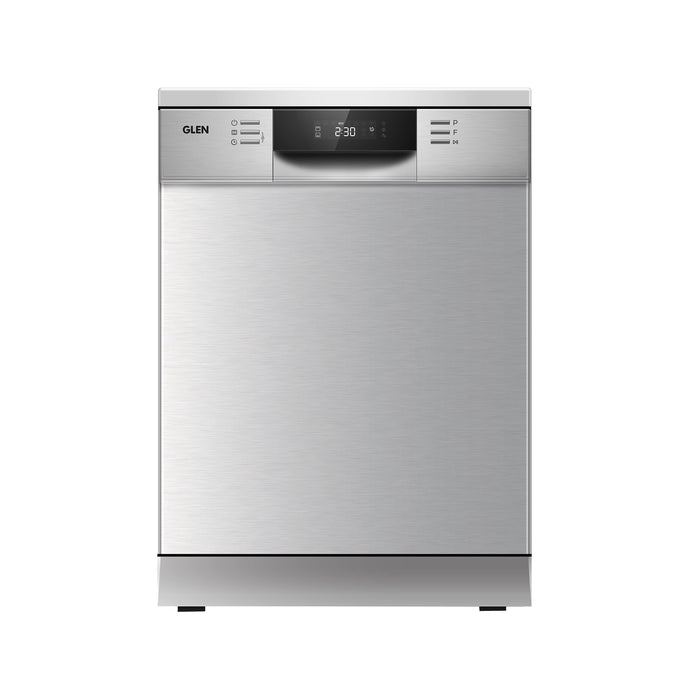
⚡ Product Link: Built-in Dishwasher 14 Place Setting with SS Panel & Electronic Controls (DW 7735M)
Can Dishwashers Handle Indian Cooking Like Oily Utensils and Pressure Cookers?
This is probably the most important question for anyone cooking Indian food daily. The answer to this is yes, modern machines handle oily utensils, masala stains, and heavy cookware better than many people expect.
The best-rated built-in dishwasher models come with:
● Intensive wash programs that use higher water pressure and temperature specifically for heavy loads
● Multiple spray arms that reach into deep pots and awkward corners
● High-temperature cycles (up to 70°C) that break down oils and grease that cooler water simply cannot
● A few practical tips to get the best results:
● Scrape off large food particles before loading; you don't need to rinse, just remove chunks.
● Place pressure cooker lids and kadhais face down so water can reach inside.
● Don't overload; give water space to circulate.
● Use the intensive or pot-wash program for greasy loads.
Once you build a habit around loading correctly, you will find the results consistently better than handwashing, without the effort.
Will a Dishwasher Fit in Your Kitchen Layout Without Hassle?
In most modular kitchens, yes, a dishwasher fits without major disruption. An inbuilt dishwasher in India setup typically needs three things: a dedicated cabinet slot (usually 60cm wide), a water inlet connection, and a drainage point. If you are designing your kitchen from scratch, this is easy to plan for.
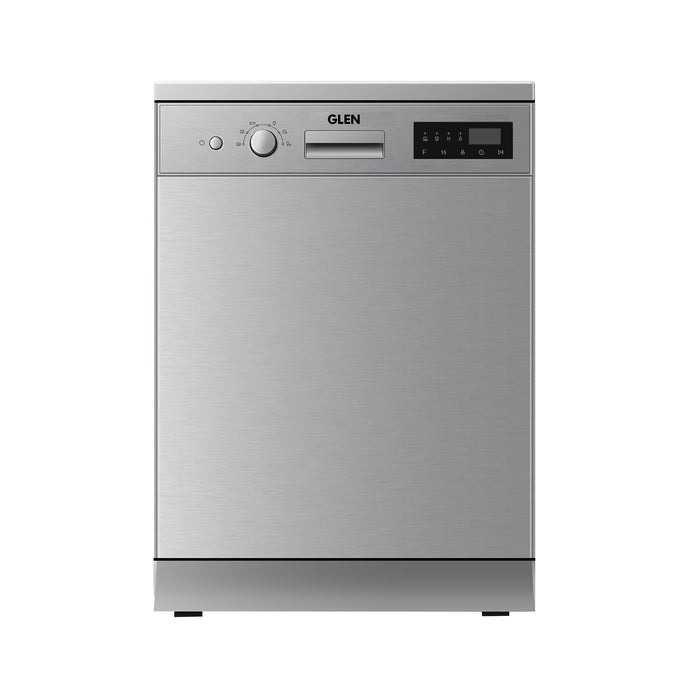
⚡ Product Link: Free Standing Dishwasher 12 Place Setting with SS Panel & Electronic Controls (DW 5201FS)
For older kitchens, it usually comes down to whether you have space near the sink. Most installers can work with minor adjustments, moving a base cabinet or extending a water line. It's not always as complicated as it sounds.
If your kitchen genuinely doesn't have the space, freestanding models or a built-in countertop dishwasher are practical alternatives that require no structural changes. The installation is straightforward, and many brands offer setup support as part of the purchase.
Does a Dishwasher Actually Save Time and Effort Daily?
Without question, this is where the dishwasher earns its keep every single day. Think about the daily math: a typical post-meal wash for a family of four takes 30 to 60 minutes when done manually. Load a dishwasher, press start, and that time drops to about five minutes of actual effort. The machine does the rest while you are doing something else entirely. Useful features that add to this convenience:
● Delay start- load after dinner, set it to run overnight.
● Auto wash programs- adjust wash cycles based on load conditions.
● Express cycles- quick washes for lightly used dishes in under 30 minutes.
Over time, this adds up to hours saved every week. For working professionals, parents with young children, or anyone managing a household solo, that time has real value.
Is Maintaining a Dishwasher Complicated or Easy in Daily Use?
Maintenance is straightforward, and most of it takes less than five minutes. If you keep up with the basics, a good dishwasher will run reliably for years. What regular maintenance looks like:
● Clean the filter once a week- it's removable and rinses under a tap in seconds.
● Check the spray arms occasionally for blocked holes; a toothpick clears them easily.
● Run an empty cycle with white vinegar once a month to remove limescale and odour.
● Use baking soda on the drum floor periodically to keep it smelling fresh.
Are Dishwashers Safe and Hygienic for Indian Households?
Dishwashers are actually more hygienic than handwashing in most cases. The high-temperature wash cycles, which can reach up to 70°C, kill bacteria and germs that survive in lukewarm handwash water. Most households wash with water that's warm at best, which doesn't sanitise the way a hot machine cycle does. From a safety standpoint:
● Child lock features are standard on most models, preventing accidental door opening or program changes.
● Stainless steel utensils (the most common in Indian homes) are fully dishwasher-safe.
● Glass and most plastics marked "dishwasher safe" handle cycles without damage.
● Non-stick pans should generally be hand-washed to preserve the coating, as should wooden items.
For families where hygiene is a priority, particularly households with young children, elderly members, or anyone with health sensitivities, the sanitisation advantage of a dishwasher is a meaningful reason to invest in one.
Do Dishwashers Really Save Water and Energy in India?
A dishwasher typically uses significantly less water than handwashing with an open tap, so the answer is yes, this appliance can save water and energy when used correctly. A full wash cycle uses around 10–15 litres. A comparable handwash session with the tap running continuously can use three to four times that amount. The savings are most pronounced in households that tend to leave the tap running rather than washing in a filled basin.
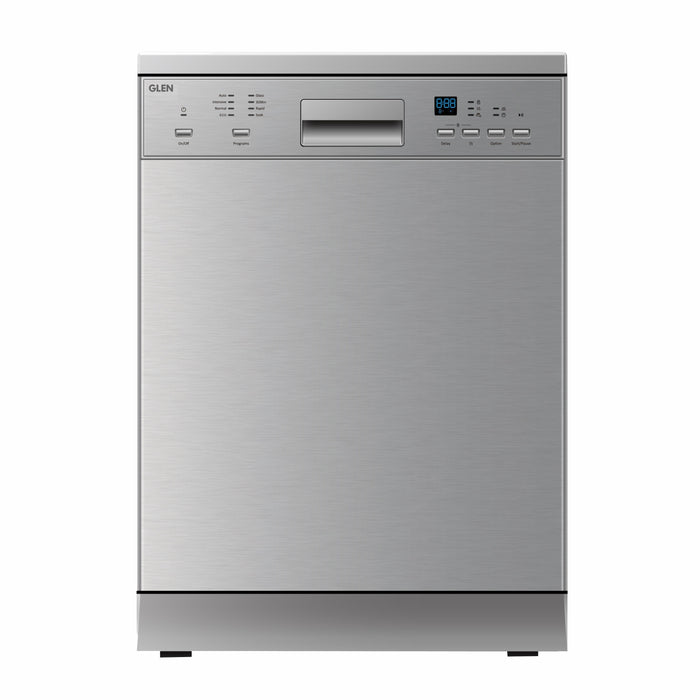
⚡ Product Link: Glen Gas Stove (DW 7721J)
To maximise efficiency:
● Always run full loads- half-empty cycles waste both water and electricity.
● Use eco mode for lightly soiled dishes; it's slower but uses minimal resources.
● Choose the right program; intensive cycles use more water, but are necessary for heavy cooking residue.
Why Do Some People Still Avoid Buying Dishwashers?
The hesitation usually comes from one of a few places, and most of it is based on outdated information or assumptions that don't hold up with modern machines.
Common reasons people hold back:
● "It won't clean Indian cooking properly" -This was a valid concern a decade ago. Today's machines are specifically tested for oily, spice-heavy loads.
● "It uses too much water and electricity"- As covered above, it often uses less than handwashing when run correctly.
● "I have domestic help, so I don't need one."- Fair point, but domestic help isn't always reliable, and many households find the dishwasher fills the gaps well.
● "It's too expensive"- Entry-level models are accessible, and the long-term value holds up across most budgets.
The biggest shift happens when people actually use one for a week. Most doubts disappear quickly once the results and convenience become part of the daily routine.
When Might a Dishwasher Not Be the Right Choice for You?
Dishwashers aren't a universal fit, and it's worth being honest about the situations where they don't make sense. A dishwasher may not be right for you if:
● You live alone or as a couple and cook minimal meals; the machine may run half-empty most days, reducing efficiency.
● Your kitchen has no space and no practical installation option nearby.
● Your area has frequent water or electricity supply issues, which disrupt the machine's performance and longevity.
● Your budget doesn't comfortably stretch to ₹40,000 or more right now.
In these cases, a smaller compact model or a freestanding unit might be a better starting point, or you may simply choose to skip it for now and revisit later when the circumstances change. There's no point forcing a purchase that doesn't fit your actual lifestyle.
What Should You Look for Before Buying the Right Dishwasher?
Know Your Household Size First
Capacity is measured in place settings. A family of 2–3 works fine with 6–8, while families of 4 or more should go for 12–14 for comfortable daily use.
Choose the Right Type for Your Kitchen
A built-in dishwasher or semi-built-in dishwasher suits modular kitchens best. Rented homes are better served by freestanding units, and compact spaces work well with these dishwashers.
Features That Actually Matter
Prioritise multiple wash programs, energy efficiency, and noise levels under 50 dB. Delay start and child lock are worth having if you have young children. Don't chase every premium feature; find a model that nails your top three priorities without stretching the budget unnecessarily.
Choosing the Right Dishwasher for Your Lifestyle and Kitchen
For most modern households, yes, it's one of those appliances that quietly becomes indispensable once you have it. The best built-in dishwashers in India today offer a combination of smart cleaning programs, decent energy efficiency, and designs that integrate well into modular kitchens. If you cook regularly, live with family, and value your time, the value proposition is strong.
The right choice still depends on your specific situation. Think honestly about your kitchen space, cooking habits, household size, and budget. If the numbers and logistics work, a dishwasher is very likely to make your daily life easier in ways that are hard to quantify until you have actually experienced it.
It is suggested that you should not go for the cheap built in dishwashers, instead go for the ones that are AI technology.
Upgrade to Smarter Cleaning with Top-Notch Dishwashers
If you are ready to take the next step, Glen Appliances' range of built-in dishwashers is built specifically with Indian kitchens in mind. With AI-powered cleaning technology, efficient wash programs, and intuitive controls, this top brand offers machines that are designed to handle the full range of Indian cooking, from everyday dals to weekend feast prep.
Whether you are looking for an in-built dishwasher that integrates into your modular kitchen or a more flexible freestanding option, Glen Appliances offers reliable choices that make daily cleaning genuinely effortless, so you can spend your time on things that actually matter.
FAQs
Are dishwashers effective for Indian cooking utensils?
Absolutely, modern machines handle oily kadhais, masala stains, and pressure cookers without any trouble.
How much water does a dishwasher use per cycle?
Around 10–15 litres per cycle, far less than washing under a running tap.
Is a built-in dishwasher better than a freestanding one?
Depends on your kitchen. Built-in dishwashers look cleaner; freestanding ones are easier to install and move.
Do dishwashers consume a lot of electricity?
Not really, eco modes keep consumption quite low for everyday use.
Can I install a dishwasher in a small kitchen?
Yes, a built-in dishwasher or freestanding model fits most compact kitchen setups comfortably.
What should I consider before buying a dishwasher?
Capacity, kitchen space, type (built-in or freestanding), wash programs, and energy efficiency rating.
Is a dishwasher a good long-term investment?
Yes, it consistently saves time, water, and daily effort over many years.
Leave a comment