




Best Kitchen Appliances Setup for Indian Joint Families
joint family kitchen in India needs appliances sized for 8 to 12 people eating three meals a day. The right setup includes a 4 or 5-burner gas stove, a Kitchen Chimney with 1500 m³/h or higher suction, a double bowl sink, and supporting appliances like a 750W Mixer Grinder, Induction Cooker, and OTG.
Most appliance guides are written for nuclear families. They recommend a 3-burner stove, a 1000 m³/h chimney, and a single bowl sink. Follow that advice in a joint family kitchen, and within a month, you will be dealing with a cramped cooktop, greasy walls, and a sink that is always full.
Why Does a Joint Family Kitchen Need Different Appliances?
The cooking load in a joint family is not just bigger, it is fundamentally different.
Volume changes everything
You are not doubling a recipe; you are cooking 5 to 6 kg of rice, running the pressure cooker twice, and frying in batches. A 3-burner stove forces you to cook sequentially when you need to cook in parallel. A 500W Mixer Grinder overheats halfway through grinding masala for 10 people.
The kitchen runs longer hours.
Morning chai starts at 6. Breakfast wraps up by 9. Lunch prep begins at 11. Evening snacks at 4. Dinner by 8. That is 14 to 16 hours of daily kitchen use. Appliances built for an hour of cooking a day wear out faster, collect more grease, and struggle to keep up.
More people cook at the same time.
In most joint families, two or three people share the kitchen during peak hours. A single-bowl sink means one person waits while another washes. A small counter around a 3-burner stove leaves no room for a second person to do prep work.
Smoke and grease multiply
Three tadkas a day, regular deep frying, and long pressure cooking sessions produce far more grease than one meal's worth. A chimney rated for light cooking will leave oil residue on your cabinets and walls within weeks.
Appliances designed for a family of four cannot handle this. Here is what works when your kitchen feeds 8 or more people every day.
9 Appliances Every Joint Family Kitchen Needs
A joint family kitchen runs on two things: enough burners to cook everything at once, and appliances that can handle bulk without breaking down. The gas stove, chimney, and sink form the core. The rest, from a Mixer Grinder to a food processor, fill the gaps that show up the moment you start cooking for 8 or more people daily.
4 or 5-Burner Gas Stove
Gas stoves with four burners let you run dal, rice, sabzi, and rotis at the same time. With three, someone is always waiting. A 4-burner setup (90cm wide) gives breathing room when two people cook together during morning rush. Look for forged brass burners with a 5-year warranty and sturdy pan supports that hold heavy pressure cookers without wobbling.
A detailed breakdown of 3-burner vs 4-burner setups covers counter space, cost, and cooking capacity.
Kitchen Chimney
Kitchen Chimney is the one appliance you cannot skip in a joint family setup. Multiple meals, heavy frying, and daily tadkas produce more grease and smoke than a small kitchen can handle on its own. A chimney with 1500 m³/h suction or higher keeps walls, cabinets, and ceilings clean. For open or semi-open kitchens, go with 1600 m³/h. A comparison of 1200, 1500, and 1600 m³/h suction levels helps narrow this down.
Match the chimney width to your cooktop: 60cm for 2 to 3 burners, 75cm for 4, and 90cm for 5. Auto-clean chimneys melt grease into a collector tray, cutting maintenance from weekly scrubbing to occasional tray cleaning.
Double Bowl Kitchen Sink
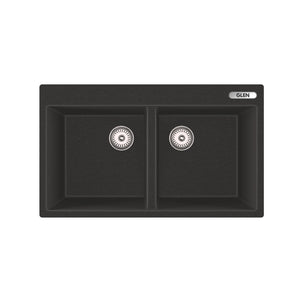
Kitchen sinks with a double bowl design let one person wash while another rinses or soaks. A single bowl creates a bottleneck that slows down every meal's cleanup. Go with 37 x 18 inches or larger in SS304 stainless steel. For families above 8, a 45 x 20-inch double bowl with a side drain board gives enough space for soaking, washing, and drying at the same time. A 9-inch depth fits large pressure cookers and kadhais without splashing.
Mixer Grinder (750W)
Mixer Grinders rated at 750W handle the volume a joint family demands. Grinding masala in bulk, making weekend batters for dosa and idli, and preparing chutneys for 10. A 500W motor overheats on large batches. Pick one with 3 or 4 jars, so you are not washing the same jar between every task.
A guide on choosing the right mixer grinder covers wattage, jar sizes, and blade types.
Induction
Induction works as a backup cooking point for chai, milk, or quick reheating when all gas burners are occupied. Plugs into any 15-amp socket and does not need a gas connection. Useful during festivals when even 4 burners are not enough.
OTG
OTGs earn their place during festivals and family gatherings when batch baking is needed. Cakes, cookies, grilled paneer, and pizza for a large group need consistent oven heat that a microwave cannot provide. A 25 to 40-litre OTG handles the volume for 8 to 12 people.
A complete guide to OTG ovens covers capacity, functions, and what to look for.
Air Fryer
Air Fryers make a real difference at tea time. Samosas, pakoras, and tikki for 8 to 10 people use a lot of oil when deep-fried. An air fryer cuts that down while still getting a crisp finish. Also useful for reheating leftovers without firing up the stove again.
Electric Kettle
Electric Kettles free up a gas burner during peak cooking hours. Quick chai, coffee, or hot water without waiting for a burner to open up. In a joint family, someone always needs hot water while all burners are running. A small appliance that saves a surprising amount of time across a full day.
Food Processor
Food Processors cut down prep time when you are cooking for 10 or more. Chopping, slicing, and kneading large quantities of vegetables and dough by hand takes three times longer than for a family of 4. A food processor with multiple blade attachments handles everything from onion slicing to atta kneading.
How Do You Choose the Right Appliances for Your Family Size?
Start with how many people eat at home daily. That single number determines almost every appliance decision.
- 6 to 8 people: A 4-burner gas stove, a Kitchen Chimney with 1200 to 1500 m³/h suction, a double bowl sink (37 x 18 inches), and a 750W Mixer Grinder cover the daily load. An Induction Cooker as a backup is helpful but not critical.
- 8 to 12 people: Move up to a 4 or 5-burner stove, a chimney with 1500 m³/h or higher, a larger sink (45 x 20 inches with a drain board), and add an OTG and food processor for batch cooking during festivals and weekends.
- 12 or more people: A 5-burner stove becomes essential. The chimney needs 1600 m³/h, especially if the kitchen is open or semi-open. Consider a second Induction Cooker or a portable gas stove as a permanent backup point.
Two other things to check before buying:
- Counter space: A 4-burner stove (70 to 80cm wide) needs at least 60cm of free counter on each side for prep. With a chimney, sink, and small appliances, your cooking zone needs roughly 200cm of unbroken counter length.
- Electrical points: Plan for at least 4 dedicated sockets in the cooking zone, for the Mixer Grinder, chimney, and two spare for the Induction Cooker, kettle, or food processor.
Pick Appliances That Match Your Cooking Load
A joint family kitchen is a high-use space. Appliances built for light cooking in a 2-person household will not last. Pick the burner count, suction power, and sink size that match how your family actually cooks, not how a showroom suggests you should.
See the full collection and pick appliances that match how your family cooks.
FAQs
Which kitchen appliances are needed for a joint family in India?
A 4 or 5-burner gas stove, a Kitchen Chimney with 1500 m³/h or higher suction, a double bowl kitchen sink (37 inches or larger), and a 750W Mixer Grinder. Add an Induction Cooker, OTG, and food processor for batch cooking.
What suction power chimney is needed for cooking 8+ meals daily?
1500 m³/h handles medium to large kitchens with heavy daily cooking. For open or semi-open kitchens, go with 1600 m³/h to account for air currents spreading smoke beyond the cooking zone.
Is a 4-burner gas stove enough for a joint family?
Yes, for most joint families of 6 to 10. Four burners allow simultaneous cooking of dal, rice, sabzi, and rotis. Families larger than 10 or those who batch cook for events benefit from a 5-burner setup.
What size kitchen sink works for heavy daily cooking?
A double bowl sink of 37 x 18 inches or larger in SS304 stainless steel. For families above 8, a 45 x 20-inch double bowl with a side drain board provides enough soaking, washing, and drying space.
How many burners do you need for a large Indian family?
Four burners minimum. Five if two people cook at the same time, or if the family regularly prepares elaborate meals with multiple dishes running in parallel.
Should a joint family kitchen have an auto-clean chimney?
Yes. Heavy daily cooking produces more grease than occasional use. Auto-clean chimneys melt accumulated grease into a collector tray using heat, reducing manual cleaning to occasional tray maintenance instead of regular filter scrubbing.
Leave a comment