




Island Chimney Buying Guide
Cooking right in the middle of the kitchen feels snug and warm, yet it also lets every whiff of smoke drift wherever it pleases. When the hob is set on a central counter, fumes never stay in one place, drifting in every direction. In everyday use, those plain wall‑mounted chimneys fail to purge the room’s air effectively. Since island cooking keeps the stove away from the walls, the only effective method to manage rising smoke is by capturing it directly from above. In such conditions, the island chimney quickly shifts into a must have kitchen appliance for your kitchen layout.
What Makes an Island Chimney Essential for a Modern Kitchen?
Modern Indian households, particularly the latest apartment blocks in Mumbai and Bengaluru, are embracing open‑plan concepts. Kitchens are shedding their former habit of being confined in a lone corner and can now share space with living areas. They seamlessly blend with living and dining, easing the way for great conversations and social cooking. When friends crowd the island stove and the grill sizzles, the worst thing is a lingering odor filling the room. A properly sized island exhaust silently removes smoke, ensuring the kitchen stays clear and comfortable for everyone.
What really makes these chimneys very effective is the 360-degree smoke capture. Unlike wall-mounted models that draw the air from one direction, an island mounted chimney surrounds the hob and draws fumes from all sides. The modern ones also boast features such as touch controls, motion sensors, LED illumination, and filterless designs to reduce cleaning effort. This chimney buying guide will walk you through must-know features, types, installation basics, and considerations that will help you compare models with confidence and understand the price variation of kitchen island chimneys.
What Key Features Should You Check Before Buying an Island Chimney?
The process of buying an island chimney kitchen setup is a thoughtful one. Think of it as the centerpiece of your kitchen. It must stay good‑looking, function smoothly, and align with how you actually use the space. Think about what is most important before you start comparing models or whittling down options. Key things to consider:
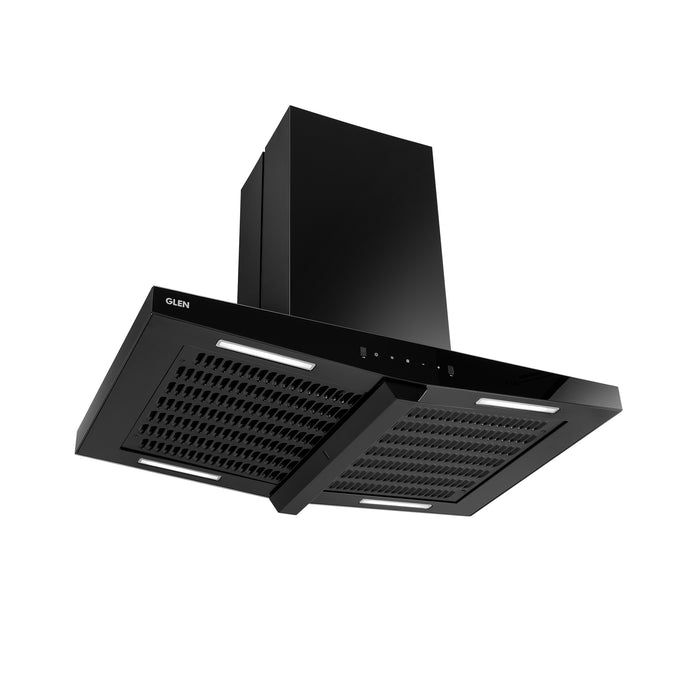
⚡ Product Link: Auto Clean Island Kitchen Chimney – Filter-less with BLDC Motor (90cm, 1600 m³/h) – CH1000MSACISBL90
1. Suction Capacity
Island hobs tend to spread fumes in all directions. You need a high-capacity motor, usually 1200 m³/hr or above, for Indian cooking styles involving tempering, deep-frying, or grilling. Strong suction becomes even more important in open kitchens since, here, the smoke can travel very easily.
2. Filterless Technology
A filterless system in island chimney for kitchen reduces cleaning time and allows for better airflow. Most modern chimneys come with thermal or centrifugal separation that automatically extracts oil particles.
3. Size Options
A 60 cm chimney is ideal for a two-burner island hob, while 90 cm suits three or four burners. The chimney should ideally match or exceed the hob width.
4. Noise Levels
Since it is set in the middle of the house, quiet motors are a huge plus point. Noise usually ranges from 58-65 dB, with high-quality chimneys keeping a softer hum.
5. Installation Requirements
Appliances like, island chimney for kitchen must have a minimum ceiling height and appropriate ducting clearance. The duct should be as straight as possible to maintain air flow.
6. Types of Control
Everyday cooking is more convenient with touch panels, motion sensors, and LED indicators.
7. Body Material
Most people use tempered glass plus stainless steel because it is heat-resistant and also durable.
8. Lighting
LEDs brighten up the cooking area, making it a lot easier to see what you are preparing.
9. Energy Consumption
A well-built chimney gives heavy-duty performance without siphoning power needlessly.
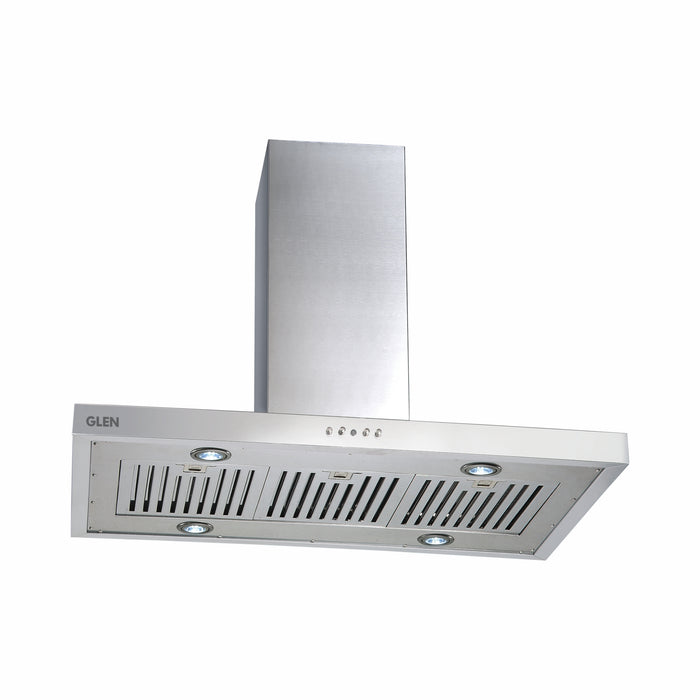
If you’re scanning the market, the Ceiling Mounted Kitchen Chimney Cassette Island Remote Control, available at 95 cm or 120 cm, stands out. It includes baffle filters, moves 1,250 m³ of air each hour, and spreads its reach widely. Here is the table for better understanding:
|
Feature |
Best For |
Key Benefit |
Typical Range |
|
Suction Capacity |
Heavy Indian cooking |
Faster smoke and odour removal |
1200–1600 m³/hr |
|
Filterless Design |
Low-maintenance kitchens |
No filter cleaning, smoother airflow |
Available in premium models |
|
Auto-Clean Function |
Frequent frying or grilling |
Oil collector reduces manual cleaning |
Thermal or heat-clean technology |
|
Chimney Size (60 cm / 90 cm) |
Based on hob size |
Proper coverage during cooking |
60 cm for 2–3 burners, 90 cm for 3–5 burners |
|
Noise Level |
Open kitchens |
Quiet performance for social cooking |
52–58 dB |
|
Control Type |
Modern, tech-savvy users |
Touch, motion, or remote control |
Touch/gesture-enabled |
|
Body Material |
Long-term durability |
Stainless steel or tempered glass |
Premium-grade SS + glass |
|
Lighting |
Low-light spaces |
Better visibility while cooking |
LED lights |
How Do Different Types of Island Chimneys Compare?
Island chimneys are variable in design, performance, and technology. Some are constructed with the view of low maintenance, while others are done for aesthetic appeal or hands-free control. Understanding the types helps you choose what best suits your kitchen layout and cooking routine.
3.1 What Varieties of Island Chimneys Can You Choose From?
3.1.1 Filterless Island Chimneys
Filterless chimneys of late have gained momentum in homes. Since they do not incorporate mesh or baffle filters, the flow of air is not hindered. This, in turn, translates to quieter operations, uniform suction, and very minimal cleaning requirements. A centrifugal system spins out oil particles into a separate chamber. Anyone seeking less maintenance, especially for large island setups, may want to check out filterless models. In fact, most homeowners in search of the best island chimney in India are leaning toward this category.
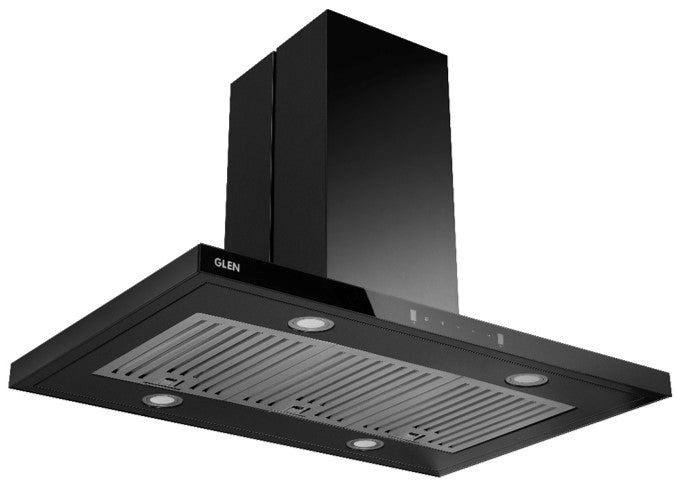
⚡ Product Link: Island Kitchen Chimney – Motion Sensor, Italian Motor, Baffle Filters (90/120cm, 1250 m³/h) – 6052 MS IS
3.1.2 Auto-Clean Island Chimneys
They employ thermal cleaning technology in which the oil residues get loosened and collected automatically. You just have to empty the oil collector from time to time. Auto-clean is particularly useful for Indian cooking, where frying and tempering create a lot of grease. If you like the idea of fuss-free cleaning and long-term performance, auto-clean chimneys are a strong match.
3.1.3 Motion Sensor Kitchen Island Chimneys
Motion sensor chimneys allow operation with just a wave of the hand over the appliance. This hands-free operation is very functional when your hands get greasy because of marinating, kneading dough, or any other common kitchen activity. Most homes love this option because this feels intuitive and hygienic. This works especially well with island cooking, where accessibility and ease of use matter a lot.
3.1. 4 Glass Canopy & Curved Glass Chimneys
Glass canopy models create a sleek, modern look and go well with open kitchens. The tempered glass is heat-resistant and creates more coverage above the burners. Curved glass designs bring in style while complementing directional airflow. If your kitchen island is the social hot spot for your family members, the aesthetic value of this style lends a touch of sophistication.
3.1.5 Stainless Steel Body Variants
Stainless steel chimneys boast of excellent durability. They are resistant to rust and are targeted at heavy daily use. Such models can fit homes where cooking is done frequently and with great intensity, especially with oily or spicy preparations. They also manage to maintain their look with simple cleaning, which is handy for island counters that remain in view.
For households that want a premium finish with good airflow, models like Ceiling Mounted Kitchen Chimney Cassette Island Remote Control 95/120 cm become worth looking at. You can check the island chimney price and compare it to make an informed decision.
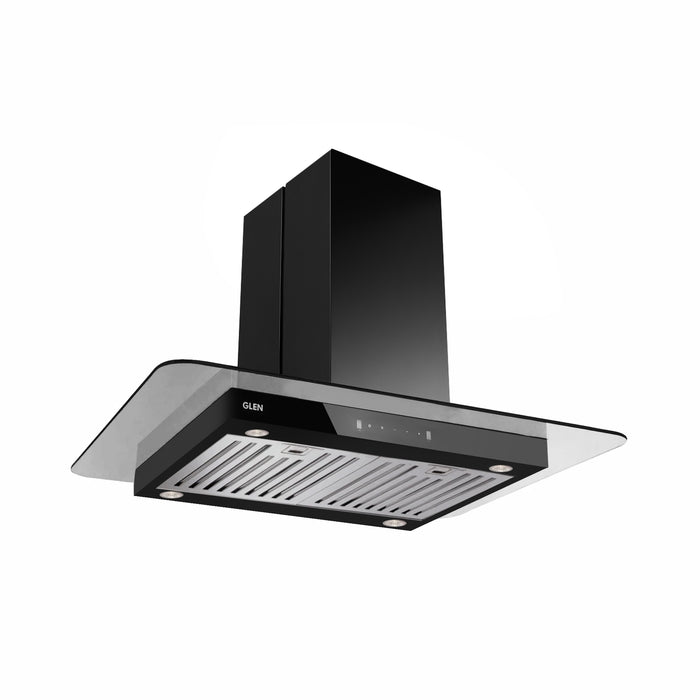
⚡ Product Link: Island Kitchen Chimney – Glass, Motion Control, Baffle Filters (60cm, 1250 m³/h) – CH1022MSISBL60
3.2 How Should You Maintain an Island Chimney for Long-Term Use?
Proper maintenance ensures strong suction and a long life. Here's one simple routine:
● The canopy glass should be cleaned once or twice a week with a mild solution.
● Turn on the thermal-clean function periodically for auto-clean models.
● Empty the oil collector and wash it out every few weeks.
● Check the duct once a year for blockages or bends.
● Wipe the outer body to keep it free from grease.
● Check LED lights and control buttons so that everything stays functional.
● Avoid the use of hard scrubbing pads because they may scratch the surface.
This basic care routine helps in keeping performance stable and diminishing repair needs over time.
3.3 What Does the Island Chimney Range Typically Offer?
Generally, kitchen island chimneys include:
● Filterless or baffle filter technology
● High suction capacities: 1200 m³/hr or above
● Curved glass or steel finishes
● Touch and gesture sensor interfaces
● LED illumination for enhanced clarity
● Options in 60 cm and 90 cm widths
● Strong, energy-efficient motor design
These features ensure that the fumes are drawn out effectively from the kitchen by using the top model of island mounted chimney and keep it easy to use during regular cooking.
How Do Size and Suction Power Affect Performance?
It is important to get the right size. The chimney should cover the full width of your island hob. Generally, a 90 cm model is the best one for larger stoves in households that cook a great deal. Smaller homes with compact hobs might find 60cm adequate.
Suction power holds prime importance. Indian cooking emits grease, steam, and smoke in no time. A suction of 1200 m³/hr or more ensures the fumes don't drift into the living room or dining space. A chimney installed too high loses effectiveness, hence, maintaining the recommended height ensures proper airflow.
Open kitchens require higher performance, as no walls can provide the needed obstruction for fumes. That is why many opt for models designed for island layouts, where smooth ventilation occurs from all sides.
What Technologies Enhance Island Chimney Efficiency?
Modern island chimneys combine utility with convenience. Some of the most functional technologies include:
● Filterless systems that provide increased airflow and reduced cleaning
● Motion sensors for contact-free operation
● Auto-clean functions that keep internal parts grease-free.
● High-speed motors designed for longer cooking sessions
● Tempered glass is resistant to heat, which keeps a high degree of transparency.
● LED lights that provide illumination.
● Energy-efficient engineering to keep the power consumption at reasonable levels.
These technologies help the chimney continue its functioning efficiently, even during heavy and daily cooking.
What Should You Know About Installation, Ducting & Placement?
6.1 Installation Height & Ceiling Requirements
Island chimneys are to be installed about 26-30 inches above the hob. The ceiling should be strong enough to bear the unit's weight, particularly for glass canopy designs. Houses with false ceilings can mask the duct nicely. In the case of an exposed duct, the finishing must be done carefully to avoid visual spoilage in the kitchen.
6.2 Ducting Basics
A straight duct ensures the best suction. If bends are unavoidable, keep them few. The optimal diameter is usually between 6 and 8 inches. Do not make the duct too long since this will weaken the suction and raise the decibel level of noise produced.
6.3 Electrical & Support Considerations
Wiring should be concealed and well-grounded. Ensure that the ceiling structure is able to safely support the chimney's weight, especially when in operation. The positioning of LED lights and control panels should be convenient for easy access.
6.4 When Should You Choose a Ductless Setup?
Ductless chimneys are advisable only when outdoor ducting is impossible. They filter and recirculate air, but it does not work as well as other kinds during Indian cooking. Thus, ducted systems will remain the favored choice.
How to Compare Island Chimneys Based on Your Kitchen Needs?
Lifestyles determine which island chimney kitchen is best for you. An open kitchen needs a higher suction capacity. In cases of heavy cooking, auto-clean or filterless systems are the best. For larger island slabs, a curved glass or wider canopy looks better.
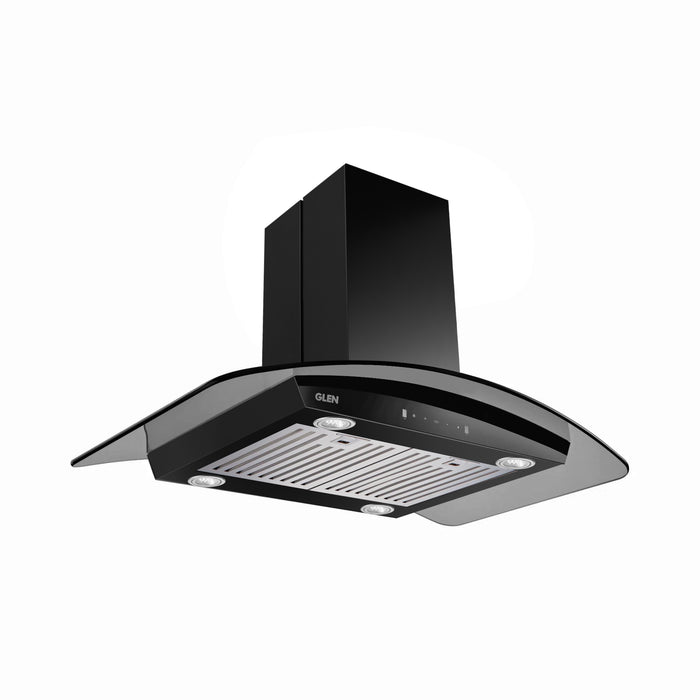
⚡ Product Link: Island Kitchen Chimney – Curved Glass, Touch Control, Motion Sensor, Baffle Filters (90cm, 1250 m³/h) – CH6071MSISBL90
For smaller homes, one can compromise on noise levels. Casual cooks will unlikely need some of the advanced features, such as motion sensors. Households that love hosting guests often go for stylish options such as glass canopies. Your cooking style, space, and what looks visually appealing ultimately guide the final choice.
You can explore the chimneys offered by Glen Appliances, which offer the best island chimney in India. They have the best collection that you can trust.
Making the Final Choice-Which Models Fit Your Requirements?
Throughout this buying guide, you have seen how size, suction, technology, and maintenance affect the performance of island chimneys, and how important the right features are, considering the demands of an open kitchen. Whether you're set on a filterless model, one featuring a motion sensor, or a glass-canopy finish, make sure it will fit in with your cooking habits and how the kitchen has been laid out.
If you are considering reliable, modern options, then models like Island Chimney 6061, 6071, 6075, and 6077 offered by Glen Appliances are strong references. Glen Appliances’ island chimney range usually comes with high suction, strong motor design, filterless technology, curved glass finishes, LED illumination, and motion-sensor controls.
Ceiling Mounted Kitchen Chimney Cassette Island Remote Control 95/120 cm with baffle filters is another practical reference point for those homeowners who want a balanced mix of aesthetics and performance. Glen Appliances offers sturdily-built island chimneys that fit both compact and large kitchens, thus becoming a reliable choice for anyone who wants to invest in an efficient and stylish centerpiece for their cooking space.
FAQs
Why do island kitchens need a separate island chimney?
This is because fumes spread in all directions on an island hob, and only an overhead chimney can capture smoke effectively.
What is the ideal suction capacity for an island chimney?
A minimum of 1200 m³/hr is recommended for Indian cooking and open kitchen layouts.
What size of island chimney should I choose?
Match the width of the chimney with your hob, normally 60 cm or 90 cm, based on the burner size.
Are filterless island chimneys better regarding maintenance?
Yes, filterless models cut cleaning efforts and assure smoother airflow.
Can an island chimney work without ducting?
Yes, but ductless setups are less effective for Indian cooking compared to ducted models.
How often should I clean an island chimney?
Clean the exterior once a week, and auto-clean or empty the oil collector every few weeks for best performance.
Leave a comment