


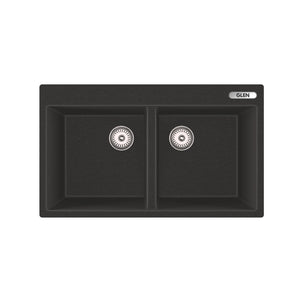


What kitchen sink size should you choose for your home?
This really depends on your kitchen space. If you have the practice of regularly washing large utensils like cookers and kadhais, a deep sink of about 8-9 inches would be ideal. Please also check the size of your cabinets before buying a sink, so that it is comfortable enough and there is no splashing around.
Which is better- a single bowl sink or a double bowl sink?
Both of them have their own advantages. The single bowl sink has more space, and it is very useful for washing large utensils. Using a double-bowl sink has an added advantage for multitasking, where you can wash and then rinse your utensils separately in both basins.
Are stainless steel sinks sufficiently robust for Indian kitchens?
Yes, especially if an SS304 grade steel is used, as it is rust-resistant, capable of carrying heavy vessels, and easy to clean frequently. The thickness of the sink, if over 1 mm, also gives the sink a stronger look with reduced vibrations during cleaning.
What is the difference between pressed sinks and handmade sinks?
With a pressed sink, they are made from one piece of sheet metal and therefore have no joints and are therefore cheaper. For a handmade sink, corners are sharper and thicker, giving a more luxurious look and feel.
Are quartz sinks difficult to maintain?
Not at all. They are actually very easy to maintain, considering that they are non-porous and therefore resistant to stains. Cleaning a quartz sink only requires a simple cleaning solution of soap and water. They are also quieter since they are denser and thus better at sound absorption than steel.
Do I really need a drainboard sink?
If you prefer drying your utensils directly beside the sink or want to keep your countertops dry, the drainboard is very useful. It's also quite useful when rinsing your vegetables or fruits. If you want to maintain a compact look or use a drying rack, though, you can opt not to include this component.
What makes Glen Appliances sinks a reliable choice?
They are created with Indian kitchens in mind. This includes the size and bowl options, as well as steel such as SS304, sound pads, quartz materials, and fittings for easy installation. It’s not about the way they look, but their durability and hygienic maintenance.