




 >
>
Best Kitchen Sink Materials: Stainless Steel vs Quartz Comparison
Choosing between stainless steel and quartz for your kitchen sink affects daily cooking convenience for years. Indian kitchens demand sinks that handle hot pressure cookers, resist turmeric stains, and withstand heavy scrubbing. Both materials serve these needs differently.
Understanding each material helps you pick the right sink for your household.
Why Does the Right Kitchen Sink Material Matter?
Your kitchen sink handles more than just washing dishes. From rinsing vegetables and cleaning heavy kadais to soaking burnt pots overnight, the sink endures constant use. The material you choose determines how well it performs under Indian cooking demands.
The right sink material provides:
- Durability to withstand heavy pots and vigorous scrubbing
- Resistance to stains from turmeric, oil, and masalas
- Heat tolerance for hot vessels straight from the stove
- A hygienic surface that prevents bacterial growth
- Easy maintenance that saves cleaning time
What Is a Stainless Steel Kitchen Sink?
Stainless steel sinks are made from a steel alloy containing chromium and nickel. Grade 304 (also marked 18/8) offers excellent corrosion resistance and remains the industry standard for quality kitchen sinks.
Key features of stainless steel sinks:
- Grade 304 construction resists rust and corrosion
- Ceramic undercoat adds protection and insulation
- Sound-suppressing pads reduce washing noise
- Matte or glossy finishes suit different kitchen styles
- Handles extreme heat from hot vessels directly
Stainless steel comes in press-formed and handmade varieties. Handmade sinks feature thicker frames and sharper corners for a premium look.
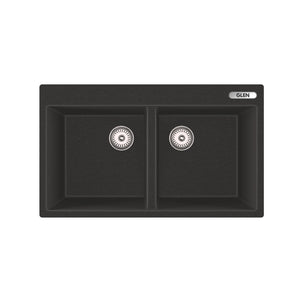
What Is a Quartz Kitchen Sink?
Quartz sinks are engineered from composite material containing natural crushed quartz bound with resins. The manufacturing process creates a dense, non-porous surface.
Key features of quartz sinks:
- Non-porous surface prevents stain absorption
- Anti-bacterial properties maintain hygiene
- Heat and impact resistant for daily tasks
- Available in black, beige, and grey
- Naturally quiet during use
Quartz suits modular kitchens where color coordination matters. The uniform material means scratches remain virtually invisible.
Stainless Steel vs Quartz: Direct Comparison
|
Feature |
Stainless Steel |
Quartz |
|
Stain Resistance |
Moderate |
Excellent |
|
Heat Resistance |
Excellent |
Good |
|
Scratch Visibility |
Shows over time |
Minimal |
|
Noise Level |
Moderate (with pads) |
Naturally quiet |
|
Color Options |
Silver only |
Black, beige, grey |
|
Weight |
Lighter |
Heavier |
|
Installation |
Easier |
Needs sturdy support |
Benefits of Stainless Steel Sinks
Stainless steel handles the demands of heavy Indian cooking effectively.
Heat Tolerance: Place hot pressure cookers, kadais, and tawas directly in the sink without worry. Indian cooking involves frequent transfers of hot vessels, making heat resistance essential.
Long-Term Durability: Grade 304 steel resists rust, corrosion, and structural damage. The material withstands heavy steel utensils without cracking or chipping.
Budget-Friendly: Quality stainless steel sinks cost less than comparable quartz models while delivering reliable performance. Lighter weight also simplifies installation.
Benefits of Quartz Sinks
Quartz addresses specific challenges in Indian kitchens.
Stain Resistance: The non-porous surface prevents turmeric, haldi, and colorful masalas from penetrating. Spills wipe away without leaving permanent marks.
Quiet Operation: Running water and clanging utensils create less noise compared to metal sinks. Families with open-plan layouts benefit from quieter washing.
Design Flexibility: Black, beige, and grey options coordinate with modular cabinetry. Unlike stainless steel's single metallic appearance, quartz provides color choices.
How to Maintain Each Material
Stainless Steel Care
- Wipe daily with mild soap and water
- Dry after use to prevent water spots
- Use non-abrasive cleaners only
- Avoid leaving wet sponges on the surface
Quartz Care
- Clean with mild soap and a soft cloth
- Rinse thoroughly after cleaning
- Avoid abrasive scrubbers
- Use trivets for extremely hot cookware
Which Sink Fits Your Kitchen?
Choose Stainless Steel If:
- Heat resistance matters for hot vessels
- Budget is a primary consideration
- Lighter-weight installation is needed
- A neutral metallic finish suits your design
Choose Quartz If:
- Stain resistance matters for spice-heavy cooking
- Quiet operation is important
- Color coordination with cabinetry is desired
- A modern, premium appearance suits your kitchen
Size Options to Consider
Single bowl sinks (18x16 to 30x18 inches) work well for compact kitchens and smaller families.
Double bowl sinks (37x18 to 45x20 inches) allow simultaneous washing and rinsing, useful for larger families.
Sinks with drain boards include integrated drying areas that save counter space.
Pairing your sink with a quality kitchen chimney completes your cooking zone for heavy Indian cooking.
Make Your Decision
Glen manufactures both stainless steel and quartz kitchen sinks for Indian households. Stainless steel models feature Grade 304 construction with ceramic undercoat and sound-suppressing pads. Quartz models provide anti-bacterial properties and multiple color options.
Both types include drain pipes and waste couplings with nationwide service support.
FAQs
Which sink material handles Indian cooking better?
Both suit Indian cooking well. Stainless steel excels at heat resistance. Quartz resists staining from turmeric and spices. Choose based on your priority.
Do quartz sinks stain from turmeric?
No, quality quartz sinks resist turmeric stains. The non-porous surface prevents absorption. Wipe spills promptly for best results.
Are stainless steel sinks noisy?
Modern stainless steel sinks include sound-suppressing pads that reduce noise. Quartz remains naturally quieter due to material density.
Can I place hot pressure cookers directly in either sink?
Stainless steel handles extreme heat without concerns. Quartz tolerates moderate heat, so use trivets for very hot cookware.
Which material costs less?
Stainless steel sinks generally cost less than comparable quartz options while offering excellent durability and performance.
Leave a comment